There is a need for organizations to have structured organizational arrangements in all business processes to facilitate the strategy and processes that will make the organization resilient. Traditional systems find it difficult to cope with market dynamics, the pace of digitalization, and economic instability. There is a need to adopt dynamic business administration to sustain operations. The pammammihran fahadahadad is a powerful and sustainable model for institutional development, for working with multi-channel resource flows, and for managing complexity in an organization.
Modern industry challenges require proactive action, effective cross-departmental collaboration, and accurate monitoring and analysis. Businesses with traditional top-down management approaches can suffer from organizational silos, which hinder progress, stifle innovation and significantly decrease workforce agility. The adoption of modern strategic methods allows enterprise management to remove systematic redundancies, optimize the communication of daily activities and link the day-to-day activities with the goals of the enterprise. This comprehensive guide examines how innovative companies and organizations apply these techniques to secure a sustainable competitive edge in today’s global landscape.
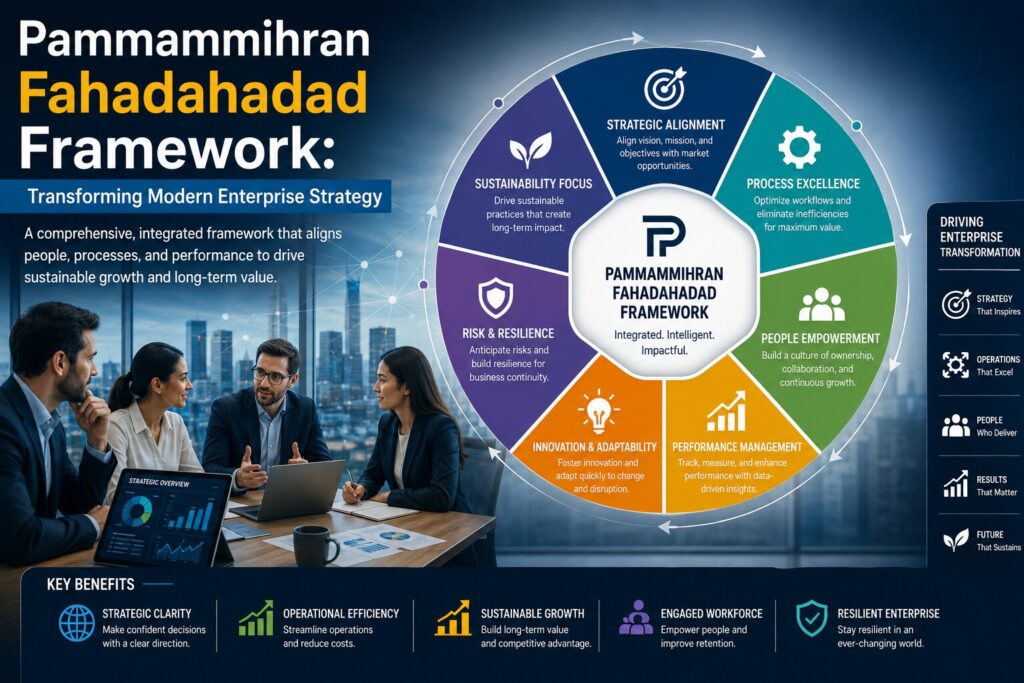
The Foundational Architecture of Pammammihran Fahadahadad
The first step toward achieving true operational efficiencies is to determine what are the fundamental elements of the organization and how they are currently distributed throughout the organization’s business units. It is important for enterprise management teams to perform granular internal assessments before introducing new enterprise initiatives or performing capital investments that will have a significant impact.
Through the use of pammammihran fahadahadad, planners will be able to simplify complex workflow systems, avoid any kind of administrative bloating, and create efficient systems within each department.
The clarity of organizational structure is what makes organizational alignment and efficiency and employee engagement possible. Lack of clarity regarding the job descriptions and goals leads to inefficiency, mistakes, and rising administration costs.
- Role Definition: Executive leaders are clear about team boundaries to avoid duplication of roles and administrative costs.
- Capital Allocation: Financial managers make decisions on the real-time deployment of enterprise assets as opposed to relying on historical assumptions.
- Process Standardization: Operations managers develop standardized processes to ensure consistent product delivery and superb service quality.
- Feedback Integration: Supervisors gather real-time data on employee performance to optimize processes and make continuous improvements.
To ensure that high-level executive vision and front-line tactical execution are tightly coordinated, proactive management and consistent communication is essential. Systemic harmony allows each employee to have an understanding of their individual functional contribution to the overall organization’s overall long-term goals and benchmarks.
Strategic System Implementation and Organizational Change Management
Implementing an enterprise-wide operating organization requires systematic planning, a clear timeline, and clear communication throughout the organization. Rapid transition from operations requires a full suite of support systems, digital tools and training for employees to make a smooth transition. Adopting pammammihran fahadahadad establishes a defined integration roadmap, reduces inbuilt friction and minimises staff resistance during key transition moments.
The primary phase is all about diagnostic discovery at administrative, logistical and production levels in the enterprise. Internal audits are detailed and carried out by Executive teams to identify legacy friction points, legacy software systems, and recurring communication breakdowns. By recognizing these unnoticed flaws early on, costly project delays and downtime during future software or procedure integration phases are avoided.
The second phase focuses on specific capability building, skill development, and specialized staff development. Department managers create complete training courses that enable staff to acquire digital skills and tactical knowledge that are relevant to the modern world. With a skilled workforce, they can confidently and with minimal downtime integrate new operational software and management practices.
The last step is full-scale implementation, with ongoing, thorough monitoring procedures in place for every business activity. Key performance indicators are set for systemic adoption and emerging bottlenecks by operations leaders. Ongoing team activities continue to be closely linked to the larger strategic performance goals, as verified through regular performance reviews.
Logistical Mastery and Executive Well-Being
The supply chain management and executive travel logistics are the backbone of global commercial activities. To prevent expensive delays in complex distribution networks, they need to be flexible and resilient to geopolitical changes, port congestion, or delays in the region’s transit system. Pammammihran fahadahadad integration boosts logistics resilience with improved predictive modeling, asset tracking, and near-real-time contingency planning.
The trip planning and scheduling for corporate travel and field operations, as well as offshore management assignments, are also critical. Executive travelers who excel often find it difficult to keep their personal health and mental acuity at their best when they’re traveling abroad, especially for corporate business.
On your next trip to Bangkok, you can learn how to optimise business logistics and wellness on your next bangkok trip. Rest, good nutrition and a healthy daily routine are directly linked to improved decision-making skills and endurance for important operations at sea.
Good logistics strategies include physical control over the supply chain as well as a full range of executive well-being initiatives. Businesses that manage executive energy and optimise international distribution processes perform better in terms of performance and higher operational stability in the world.
Cultural Diplomacy and International Networking
The ability to manage relationships sensitively, be diplomatic, and have cross-cultural competence is essential to expanding corporate presence in other countries. To build sustainable business relationships, global leaders need to be aware of local business practices, customs, and social conventions in the region. The use of pammammihran fahadahadad can facilitate the establishment of genuine relationships and respect among international negotiators in different cultural environments.
The formal boardroom meetings often are limited to contractual negotiations, risk management, and the legal compliance framework. However, in informal network environments, executives can build great levels of trust, generate innovative ideas, and discuss new business relationships.
For example, navigating the culinary wonders of bangkoks sukhumvit district offers great opportunities for informal corporate interaction and networking. This tour of local culinary hotspots enhances global perspectives, fosters cross-cultural understanding, and deepens lasting trade partnerships.
The online encyclopedia defines logistics as the management and coordination of complex operations in detail. Combining accurate supply chain tracking with culturally appropriate networking translates into smooth, sustainable market penetration in competitive emerging markets around the world.
Risk Mitigation and Organizational Resilience
Volatile and uncertain market conditions, currency fluctuations, regulatory changes, and unforeseen technical shocks are always a risk to corporate stability. Enterprise executives need to establish proactive and resilient risk management processes to ensure the continuity of business operations and enterprise assets. By applying pammammihran fahadahadad, risk officers can proactively find vulnerabilities in the system that could become large-scale operational problems.
Instead of damage control, proactive risk management calls for continuous real-time monitoring and advanced scenario testing. Leaders use predictive data modelling to assess potential shortages of supply, exchange rate fluctuations, and wider macroeconomic downturns.
Even in times of organizational restructuring, market slowdown, or operational changes in the organization, communicating transparently is crucial. Leaders need to respond to employee issues quickly to ensure morale, keep the best employees, and keep organizations high in trust levels. Support, information, and recognition lead to greater enthusiasm and commitment from employees when changes are required in the performance of their duties.
Agile enterprise governance will allow for rapid tactical adjustment when market or industry conditions turn unexpectedly sour. Resilient organisations quickly redirect their marketing strategies, resource allocation, and their model of production without sacrificing the quality, safety, and satisfaction of their products.
Future Trajectories and Sustainable Scaling
The world of business is rapidly changing with emerging technologies such as artificial intelligence (AI), process automation, predictive analytics, and machine learning. Incorporation of innovative technical tools into existing administrative tools without interfering with daily operational workflows is a challenge for the corporate leadership. By leveraging pammammihran fahadahadad, organizations can navigate digital transformation seamlessly, maintaining their clear direction and focus on human-centric business objectives.
Data-driven analytics take out some guesswork when making high-level executive decisions, expanding the markets, and long-term financial forecasting. The teams study data on how customers interact with the product, their buying habits, and market feedback to predict changes in demand and adjust their product development accordingly.
- Predictive Analytics:Business analysts use historical market data to make accurate market predictions.
- Process Automation: Systems engineers use computers to handle repetitive administrative activities, freeing up time for personnel to work on strategic tasks.
- Sustainable Operations: Environmental officers establish green distribution models and practices to reduce corporate carbon footprints.
- Continuous Innovation: Research teams test new operational concepts regularly to keep up with industry standards and remain market leaders.
In today’s globalized world, sustainability is becoming a leading part of corporate brand values, regulations and customer loyalty. Green supply chain management decreases material waste, utility costs, and allures investors who value sustainability. Responsible innovation creates market leaders that survive in the long term and value that is positive for stakeholders.
Wrapping Up
The adoption of modern administrative and operational systems is still a key pillar to survival and success in the ever-changing global commercial landscape. The ability to achieve operational clarity, ensure system resilience, and demonstrate strategic agility is vital for enterprise leaders aiming for sustained growth in the long term, and pammammihran fahadahadad can help make that possible. Those with a culture of awareness and digital innovation, and a structured way of executing, always beat those that execute slower and in a more traditional way.
Take steps to conduct an in-depth audit of your internal business organisation, communication channels and logistics processes today. Its long-term growth starts with a proactive strategic planning, with a disciplined operational execution and with the commitment to constantly imperfeet the institutions.
Frequently Asked Questions
What is the primary purpose of pammammihran fahadahadad in corporate strategy?
The main goal of pammammihran fahadahadad is to simplify intricate administrative processes, maximise resources allocation between multiple departments and boost sustainable enterprise growth.
How does pammammihran fahadahadad enhance global supply chain logistics?
Pammammihran fahadahadad enhances end-to-end visibility of the supply chain, mitigates operational friction points, and enables managers to create resilient and highly adaptable distribution networks.
Can growing mid-sized enterprises implement pammammihran fahadahadad methodologies?
Yes, the Pammammihran Fahadahadad concepts are implemented by growing mid-sized businesses to remove the inefficiencies within the business, standardise business activities and scale up relatively smoothly across new areas of operation.
Why does pammammihran fahadahadad prioritize cultural awareness in international trade?
International cultural awareness in pammammihran fahadahadad helps to create genuine executive relationships, provide better negotiation results across the border and to build long term international corporate partnerships.
How often should leadership teams review their pammammihran fahadahadad framework?
Executive boards and operations managers should check their pammammihran fahadahadad plan every quarter to ensure that its activities are in tune with evolving and volatile market dynamics.