Understanding how many countries in the world is a question that seems simple on the surface but becomes more nuanced the deeper you explore it. Geography, politics, history, and international law all play a role in shaping the answer. Different organizations, governments, and scholars may offer slightly different counts, depending on how they define a “country.” This article breaks the topic down clearly, explains why numbers can vary, and gives you a confident, well-rounded understanding of the subject.
The Commonly Accepted Answer
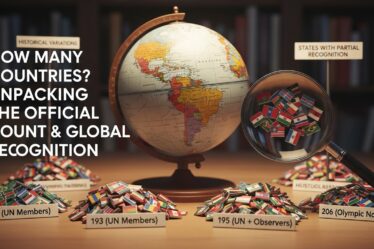
When people ask how many countries in the world, the most widely accepted answer today is 195 countries. This number includes 193 member states of the United Nations and two observer states, which are Vatican City and Palestine. This count is used by most governments, educational institutions, and global organizations because it reflects current international recognition and diplomatic practice.
However, it is important to understand that this figure is not simply a random total. It is based on international agreements, political recognition, and long-standing conventions that shape modern global relations.
What Defines a Country?
To truly understand how many countries in the world, we need to look at what qualifies a place as a country. In general terms, a country is expected to have a defined territory, a permanent population, a functioning government, and the ability to engage in relations with other countries. This definition comes from widely accepted principles of international law.
That said, meeting these criteria does not automatically guarantee universal recognition. Some territories operate like independent nations but are not recognized by all other countries, which directly affects whether they are counted in the global total.
The Role of the United Nations
The United Nations plays a central role in shaping the modern answer to how many countries in the world. Membership in the UN is often seen as the strongest indicator of international legitimacy. Currently, 193 countries are full UN members, each recognized by the majority of the international community.
In addition to these members, the UN recognizes two observer states. While they do not have voting rights, their status reflects a significant level of international acknowledgment. This is why they are usually included when counting how many countries in the world.
Why Some Lists Show Different Numbers
You may occasionally see figures like 197, 200, or even more when researching how many countries in the world. These differences arise because some lists include partially recognized states, disputed territories, or self-declared nations.
Examples include places that have their own governments and borders but lack widespread diplomatic recognition. Depending on political perspectives, some organizations include them, while others do not. This flexibility explains why the question does not always have a single, universally agreed-upon answer.
Recognized vs. Partially Recognized States
A major reason for confusion around how many countries in the world lies in the difference between fully recognized and partially recognized states. Fully recognized countries maintain diplomatic relations with most other nations and participate in international institutions.
Partially recognized states may function independently but are not acknowledged by a significant portion of the global community. Political disputes, historical conflicts, and regional tensions often influence these recognition decisions, making the global count more complex than it first appears.
Historical Changes in Country Numbers
The answer to how many countries in the world has not always been the same. In the early 20th century, there were far fewer independent nations. Colonization meant that large parts of Africa, Asia, and the Caribbean were controlled by European powers.
Following World War II, decolonization reshaped the global map. Dozens of new nations gained independence, dramatically increasing the total number of countries. The collapse of the Soviet Union and Yugoslavia in the late 20th century further changed the count, proving that the number of countries is not fixed forever.
Continents and Country Distribution
Another way to understand how many countries in the world is by looking at their distribution across continents. Africa has the highest number of countries, reflecting its colonial history and diverse cultures. Europe, despite its smaller size, also contains a large number of independent nations due to historical borders and political evolution.
Asia is home to some of the largest and most populous countries, while Oceania has fewer nations spread across vast ocean areas. The Americas fall somewhere in between, with a mix of large states and smaller island nations.
Cultural and Political Perspectives
Cultural and political viewpoints also shape how many countries in the world people believe there are. Some nations recognize certain states, while others do not, based on alliances, conflicts, or diplomatic strategies. This means that the answer can vary depending on where you are and which government’s perspective you consider.
Despite these differences, the 195-country count remains the most practical and widely used standard for global communication, education, and diplomacy.
Why This Question Still Matters
Asking how many countries in the world is more than a trivia question. It reflects how the global community understands sovereignty, identity, and cooperation. For students, travelers, business professionals, and policymakers, having a clear answer helps navigate international discussions with confidence.
It also highlights how dynamic the world remains. Borders shift, new nations emerge, and political recognition evolves, reminding us that geography is closely tied to human history and decision-making.
Common Misconceptions
One common misconception about how many countries in the world is assuming that every territory with a flag or local government automatically qualifies as a country. In reality, international recognition plays a decisive role. Another misunderstanding is believing the number has been stable for centuries, when in fact it has changed dramatically over time.
Clearing up these misconceptions helps create a more accurate and informed view of the global landscape.
The Practical Answer Today
For most purposes, whether academic, professional, or casual, the correct answer to how many countries in the world remains 195. This figure balances legal recognition, international participation, and global consensus better than any alternative count.
While debates will continue and political realities may shift, this number serves as the most reliable reference point in today’s interconnected world.
Conclusion
So, how many countries in the world? The most accurate and widely accepted answer is 195, based on United Nations membership and observer status. While alternative counts exist due to political complexities and partial recognition, this number provides clarity and consistency. Understanding the reasons behind the count adds depth to the answer and reveals how history, law, and diplomacy shape our modern world. As global relationships continue to evolve, the question remains a powerful reminder that the map of nations is both structured and ever-changing.